---
title: "Waxing Moon Planting Guide: Sowing, Growth, and New Intentions"
metaDescription: "The waxing moon supports sowing above-ground crops, transplanting, and starting new projects. Learn what to plant in the first and second quarter and how to set growth intentions."
publishedAt: 2026-06-28T10:00:00.000Z
dateModified: 2026-06-28T10:00:00.000Z
wordCount: 1490
type: lunar-gardening
slug: waxing-moon-planting-guide
url: /learn/lunar-gardening/waxing-moon-planting-guide
heroImage: /images/articles/waxing-moon-planting-guide/waxing-moon-planting-guide-hero.png
ogImage: /images/articles/waxing-moon-planting-guide/waxing-moon-planting-guide-og.png
heroImageAlt: "Waxing Moon planting guide with leafy seedlings, seed trays, watering can, and a growing moon"
---
# Waxing Moon Planting Guide: Sowing, Growth, and New Intentions
Step outside a few nights after a new moon and the sky still looks empty. But it isn't. A sliver has returned in the west, and it grows a little fatter each evening. Gardeners have watched this for generations and drawn the same conclusion: as the moon swells from crescent to full disc, everything above the soil seems to lean upward, reaching for the light. This is the waxing moon, the half of the cycle made for sowing, growth, and beginnings.
So if you garden by the moon, the next two weeks are when you put seeds in the ground. Here is what the waxing moon is, why it has long guided above-ground planting, what to do in each quarter, and how to tuck a little intention-setting into the work. A windowsill of basil counts just as much as a full vegetable bed. The rhythm is identical, and trying it costs you nothing.
## What the Waxing Moon Is
The waxing moon is the growing half of the cycle: roughly fourteen days between the new moon and the full moon. Each night a little more of the disc lights up, moving from the thin waxing crescent through the first quarter, then the waxing gibbous, and finally the full moon. The [moon phases explained guide](/learn/moon/moon-phases-explained-8-phases-guide) walks through all eight in order if you want the full picture.
For gardeners, the split that matters is growing half versus shrinking half. We unpack that contrast in [waxing vs waning moon meaning](/learn/moon/waxing-vs-waning-moon-meaning), but the short version is this: the waxing moon is for building and beginning, the waning moon for harvesting, pruning, and clearing away. Working with the second half of the cycle instead? The [waning moon harvesting guide](/learn/lunar-gardening/waning-moon-harvesting-guide) is its companion piece.
Take 2026. The new moon on June 14 in Gemini opens a waxing window that climbs toward the Strawberry Moon, the full moon in Capricorn on June 29. Those two weeks are prime planting time.
## The Idea of Rising Sap
The old reasoning behind waxing-moon planting holds up even when you treat it as folklore rather than fact. The moon pulls the ocean tides, and traditional gardeners figured it nudges the moisture in soil and plants the same way. As the moon brightens, the thinking goes, sap rises and energy travels upward into stems, leaves, and fruit.
That is why the waxing half belongs to everything that grows above the ground. The swelling light reads as a cue to reach up, and gardeners time their sowing to ride that pull. You don't have to believe in a literal sap tide for this to pay off. Working with the moon hands your garden a calendar and a gentle structure, and structure is what gets you out there tending it week after week instead of letting a tray of seedlings dry out on the porch.
## What to Plant During the Waxing Moon
The rule is wonderfully simple. During the waxing moon, you plant what you harvest above the soil: leafy greens, herbs, and any crop that sets its fruit or seed up in the air. The waxing half splits into two useful stages.
### First Quarter: New Moon to First Quarter
This first stretch, from the new moon through the first-quarter half-moon, traditionally suits leafy greens and crops where you eat the leaves or stems. The energy here favors strong foliage and a good balance between root and leaf.
Good first-quarter sowings include:
- Lettuce, spinach, kale, and chard
- Cabbage, broccoli, and cauliflower
- Celery and leafy herbs like parsley, cilantro, and basil
- Grains and cereal crops
### Second Quarter: First Quarter to Full Moon
From the first-quarter moon up to the full moon, the light is strong and still growing. This is the moment for fruiting crops that carry their seeds inside, the plants that throw real energy into what they produce above the ground.
Good second-quarter sowings include:
- Tomatoes, peppers, and eggplant
- Beans, peas, and other legumes
- Squash, cucumbers, pumpkins, and melons
- Grapes and other vining fruit
The last few days before the full moon are especially prized for sowing and transplanting, when moisture and growth energy both crest at once.
## A Simple Waxing-Moon Task Table
Here is the waxing half at a glance, so you can match the moment to the task.
| Phase | Window | Best For |
| --- | --- | --- |
| Waxing crescent / first quarter | New moon to first quarter | Leafy greens, herbs, cabbage family, grains |
| Waxing gibbous / second quarter | First quarter to full moon | Tomatoes, peppers, beans, squash, vining fruit |
| Just before full moon | Final 1 to 2 days | Final sowings, transplanting, watering in |
To find these windows for the year ahead without doing the math yourself, the [2026 moon planting and harvest calendar](/learn/lunar-gardening/2026-moon-planting-and-harvest-calendar) lays out every phase by date.
 ## Transplanting and Feeding
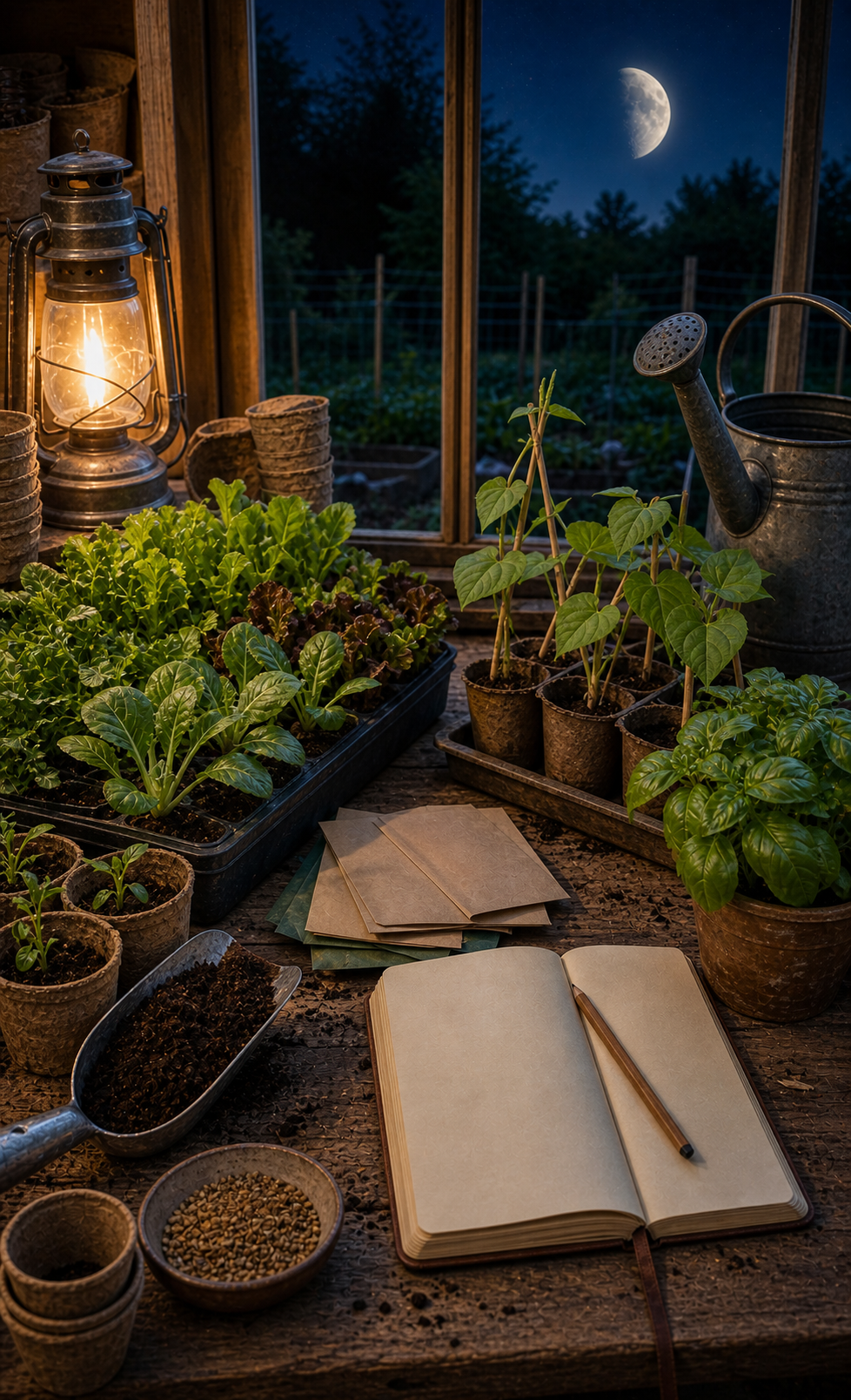
Seeds aren't the whole story. That same growing light is considered ideal for transplanting seedlings into their final beds. Moving a young plant shocks its roots, so traditional gardeners do it while growth energy is rising, giving the seedling the strongest possible shove to settle in and take hold.
Feeding follows the same logic. Fertilize during the waxing moon and you are adding nutrients right when the plant is reaching hardest and most ready to use them. Water deeply through this half too, especially as the full moon approaches and soil moisture is said to be at its fullest.
A practical waxing-moon checklist:
- Sow above-ground crops by quarter, as above
- Transplant seedlings into beds and containers
- Feed leafy and fruiting plants
- Water generously, building toward the full moon
- Graft and take cuttings you want to root and grow
## The Waxing Moon and New Intentions
The garden is the literal version of what the waxing moon teaches, and the same energy works on your plans and projects. If the waning moon is for finishing and releasing, the waxing moon is for planting in every sense of the word.
Astrologers have long treated the new moon as the moment to set intentions and the waxing days that follow as the time to nurture them into shape. The [new moon rituals and intentions guide](/learn/moon/new-moon-rituals-intentions-guide) is a natural place to begin: you plant the seed of an idea at the dark of the moon, then tend it as the light grows. To time goals to the cycle more broadly, the [moon manifestation by phase guide](/learn/moon/moon-manifestation-by-phase-guide) maps each phase to a kind of inner work.
A few ways to work with growth intentions:
- Write one clear intention at or just after the new moon
- Take a single small action on it during the first quarter
- Build momentum through the second quarter, the way a plant adds leaves
- Notice what has come to fruition at the full moon
Keep it as literal or as poetic as you like. Even just naming a goal at the new moon and checking on it at the full moon gives your month a satisfying shape.
## Working With the Zodiac Sign Too
Many lunar gardeners add a second layer: the sign the moon is passing through. The moon moves through a zodiac sign roughly every couple of days, and the elements are traditionally matched to tasks. Water and earth signs favor planting; air and fire signs lean toward other work. The [best planting and harvesting days by zodiac sign](/learn/lunar-gardening/best-planting-and-harvesting-days-by-zodiac-sign) guide breaks this down if you want to lay it over the waxing rhythm.
You don't have to track the sign to get value from the phase, though. Start with the simple waxing-and-waning split, and add the zodiac layer later, once the basic rhythm feels like second nature.
## A Sample Waxing Window in 2026
Picture the window that opens with the new moon in Cancer on July 14, 2026, and climbs toward the Sturgeon Moon, the full moon in Aquarius on July 29. The early days after July 14 are your first-quarter window for leafy greens and herbs. As the moon fills out toward the third week of July, you slide into prime second-quarter time for tomatoes, beans, and squash, finishing with transplanting and a deep soak as the full moon nears. One clean cycle, beginning to fullness, ready to repeat all season long.
## Transplanting and Feeding
Seeds aren't the whole story. That same growing light is considered ideal for transplanting seedlings into their final beds. Moving a young plant shocks its roots, so traditional gardeners do it while growth energy is rising, giving the seedling the strongest possible shove to settle in and take hold.
Feeding follows the same logic. Fertilize during the waxing moon and you are adding nutrients right when the plant is reaching hardest and most ready to use them. Water deeply through this half too, especially as the full moon approaches and soil moisture is said to be at its fullest.
A practical waxing-moon checklist:
- Sow above-ground crops by quarter, as above
- Transplant seedlings into beds and containers
- Feed leafy and fruiting plants
- Water generously, building toward the full moon
- Graft and take cuttings you want to root and grow
## The Waxing Moon and New Intentions
The garden is the literal version of what the waxing moon teaches, and the same energy works on your plans and projects. If the waning moon is for finishing and releasing, the waxing moon is for planting in every sense of the word.
Astrologers have long treated the new moon as the moment to set intentions and the waxing days that follow as the time to nurture them into shape. The [new moon rituals and intentions guide](/learn/moon/new-moon-rituals-intentions-guide) is a natural place to begin: you plant the seed of an idea at the dark of the moon, then tend it as the light grows. To time goals to the cycle more broadly, the [moon manifestation by phase guide](/learn/moon/moon-manifestation-by-phase-guide) maps each phase to a kind of inner work.
A few ways to work with growth intentions:
- Write one clear intention at or just after the new moon
- Take a single small action on it during the first quarter
- Build momentum through the second quarter, the way a plant adds leaves
- Notice what has come to fruition at the full moon
Keep it as literal or as poetic as you like. Even just naming a goal at the new moon and checking on it at the full moon gives your month a satisfying shape.
## Working With the Zodiac Sign Too
Many lunar gardeners add a second layer: the sign the moon is passing through. The moon moves through a zodiac sign roughly every couple of days, and the elements are traditionally matched to tasks. Water and earth signs favor planting; air and fire signs lean toward other work. The [best planting and harvesting days by zodiac sign](/learn/lunar-gardening/best-planting-and-harvesting-days-by-zodiac-sign) guide breaks this down if you want to lay it over the waxing rhythm.
You don't have to track the sign to get value from the phase, though. Start with the simple waxing-and-waning split, and add the zodiac layer later, once the basic rhythm feels like second nature.
## A Sample Waxing Window in 2026
Picture the window that opens with the new moon in Cancer on July 14, 2026, and climbs toward the Sturgeon Moon, the full moon in Aquarius on July 29. The early days after July 14 are your first-quarter window for leafy greens and herbs. As the moon fills out toward the third week of July, you slide into prime second-quarter time for tomatoes, beans, and squash, finishing with transplanting and a deep soak as the full moon nears. One clean cycle, beginning to fullness, ready to repeat all season long.
 ## Conclusion: Plant With the Light
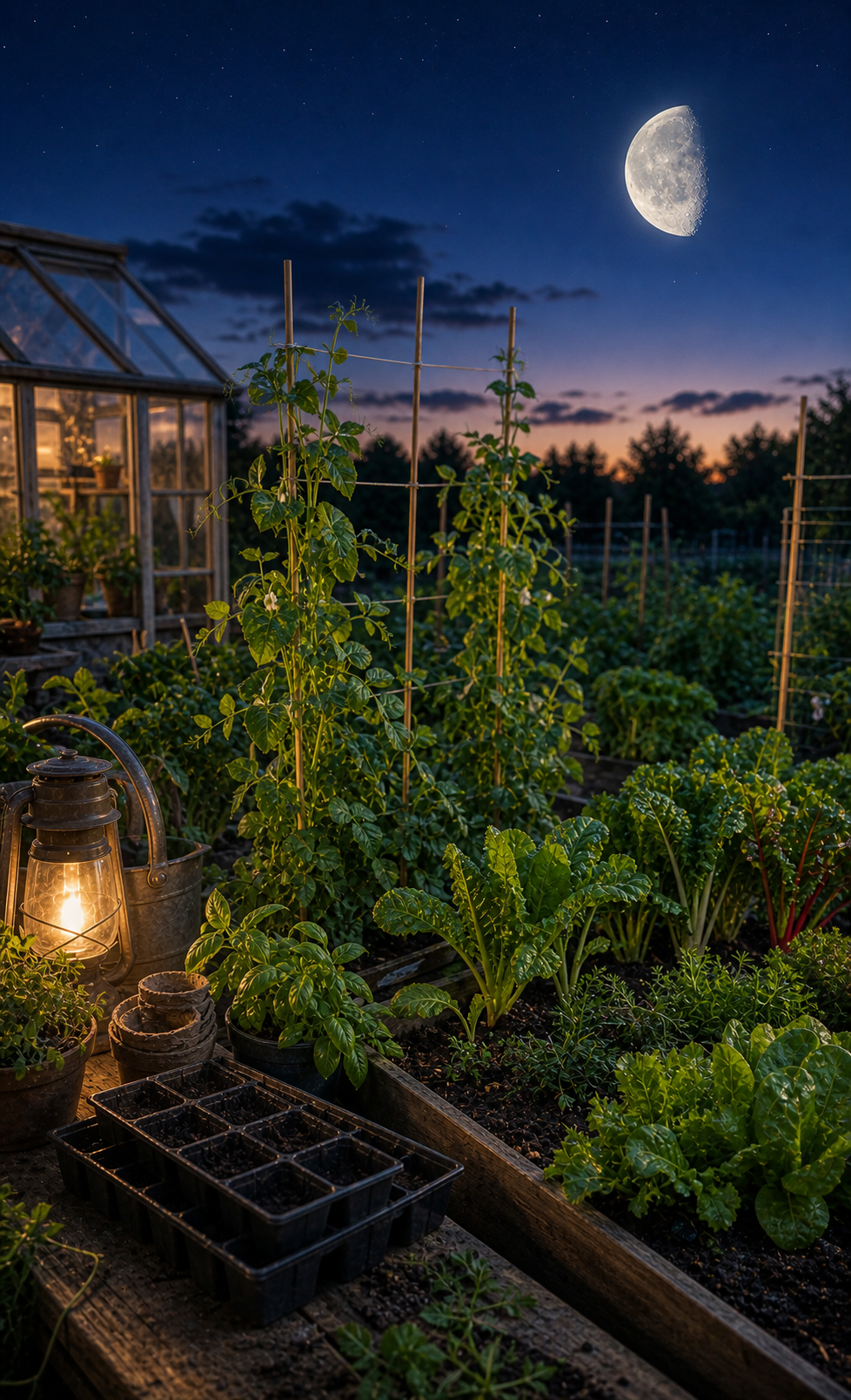
Start small tonight. Step out, find the moon, and notice how full it looks. If it's a sliver and growing, sow a row of lettuce or set a tray of basil on the sill. Transplant and feed while the light builds, let the new moon prompt you to begin something fresh, and shift into harvesting and clearing once the moon fills and starts to wane.
Lunar gardening, in the end, is about lining your effort up with a cycle larger than yourself, and your own birth chart is part of that same pattern. To see how the moon and the rest of the sky were arranged at your beginning, generate your free [birth chart](/birth-chart) and let it shape the intentions you plant next.
## Conclusion: Plant With the Light
Start small tonight. Step out, find the moon, and notice how full it looks. If it's a sliver and growing, sow a row of lettuce or set a tray of basil on the sill. Transplant and feed while the light builds, let the new moon prompt you to begin something fresh, and shift into harvesting and clearing once the moon fills and starts to wane.
Lunar gardening, in the end, is about lining your effort up with a cycle larger than yourself, and your own birth chart is part of that same pattern. To see how the moon and the rest of the sky were arranged at your beginning, generate your free [birth chart](/birth-chart) and let it shape the intentions you plant next.