---
title: "Waning Moon Harvesting Guide: What to Harvest, Prune, and Release"
metaDescription: "The waning moon is the time to harvest root crops, prune, weed, and release. Learn what to do in the third and fourth quarter moon phases for a stronger, more abundant garden."
publishedAt: 2026-06-28T10:00:00.000Z
dateModified: 2026-06-28T10:00:00.000Z
wordCount: 1514
type: lunar-gardening
slug: waning-moon-harvesting-guide
url: /learn/lunar-gardening/waning-moon-harvesting-guide
heroImage: /images/articles/waning-moon-harvesting-guide/waning-moon-harvesting-guide-hero.png
ogImage: /images/articles/waning-moon-harvesting-guide/waning-moon-harvesting-guide-og.png
heroImageAlt: "Waning Moon harvesting guide with root crops, pruning shears, garden soil, and a crescent moon"
---
# Waning Moon Harvesting Guide: What to Harvest, Prune, and Release
Most of us learn to garden by looking up: at the seedling reaching, the bean climbing its pole, the tomato swelling toward the sun. So it surprises people to hear that moon gardeners spend half of every month working in the opposite direction, looking down. Once the full moon passes, their attention drops below the soil line, to roots and storage and the slow business of putting things away. The light is leaving, and they follow it down.
Those two weeks after each full moon are the quiet, grounding half of the cycle. The moon shrinks a little every night, and the work changes with it. Out come the harvest basket, the pruning shears, and the weeding fork.
## What Is the Waning Moon?
The waning moon is the stretch from the full moon back to the new moon. It holds two main phases: the third quarter, where the bright gibbous shrinks toward a half-lit disc, and the fourth quarter, the thin crescent that fades into darkness. The [moon phases explained guide](/learn/moon/moon-phases-explained-8-phases-guide) walks through all eight in order if you want the fuller breakdown.
What matters most is direction. During the waxing half, light is building toward fullness. During the waning half, it is draining away, and the cycle is winding down. For a side-by-side look at how the two halves differ in mood and meaning, see [waxing vs waning moon meaning](/learn/moon/waxing-vs-waning-moon-meaning). Gardeners treat these darker weeks as the time to consolidate, draw inward, and gather in everything the season made.
## Why Energy Draws Downward
There is an old belief among moon gardeners that the moon pulls on the moisture and sap inside a plant the same way it pulls the tides. While the moon waxes, the story goes, sap rises toward the leaves and stems, feeding everything that grows above the soil. After the full moon, the flow reverses. Moisture and energy sink back down toward the roots.
Take it literally or take it as a handy way to organize the month. Either way, it points to real timing. When the plant's strength is concentrated below the surface, the underground parts are at their fullest and richest. That is why the waning moon became the traditional window for root crops, for transplanting, and for any job that rewards a plant for investing in its base instead of its tips. The waxing half handles the opposite work, sowing leafy greens and above-ground fruit while the light climbs, and the companion [waxing moon planting guide](/learn/lunar-gardening/waxing-moon-planting-guide) covers it in full.
## What to Harvest During the Waning Moon
This is prime harvesting time, above all for anything bound for the cellar or the pantry. The thinking is simple: lower moisture in the upper plant means produce that keeps longer and resists rot. The fourth quarter, the driest and most inward phase, gets singled out as the best window for storage crops. There is a real satisfaction to gathering a winter's worth of food in the days the tradition favors most.
### Root Crops and Storage Vegetables
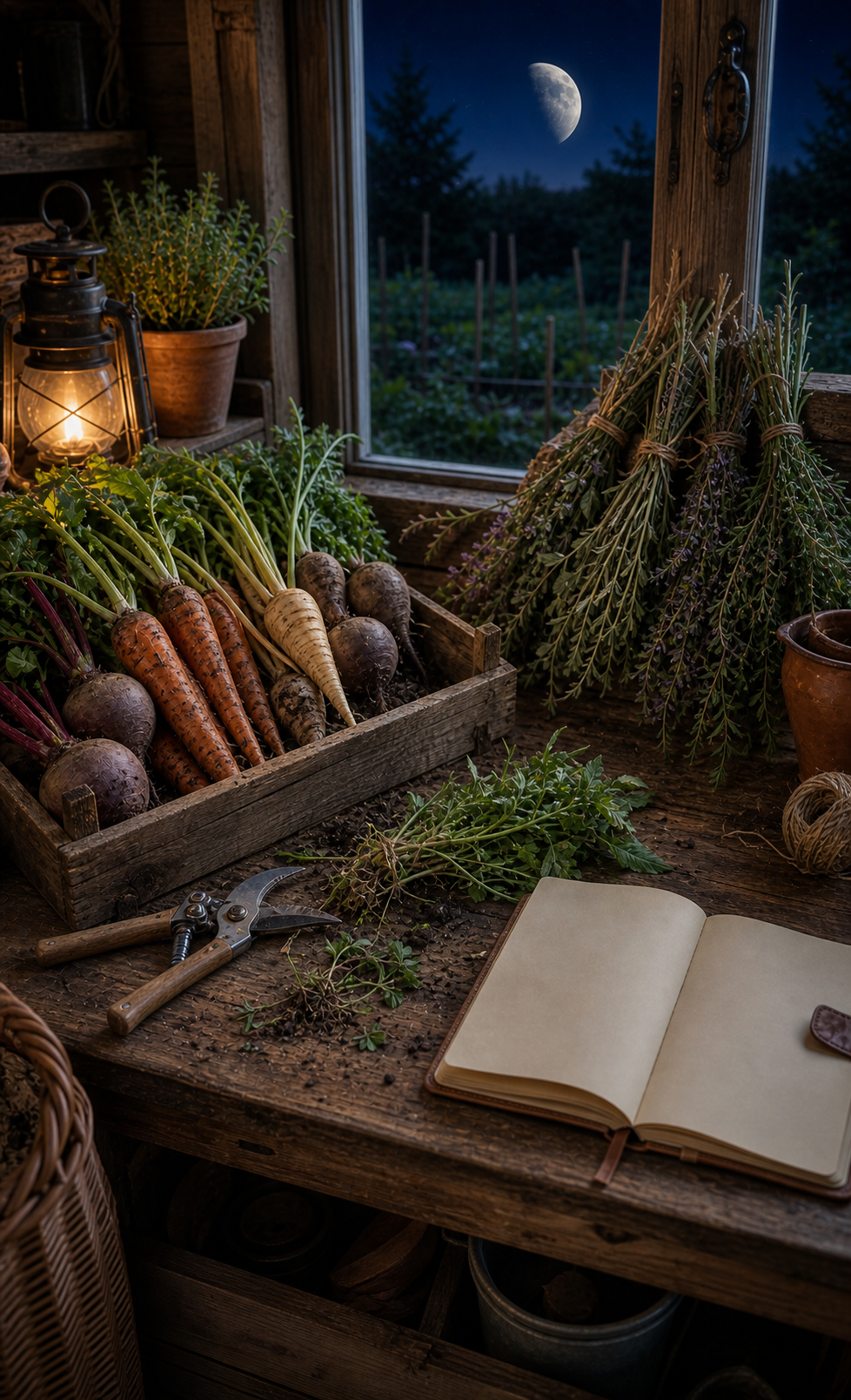
Pull your carrots, beets, potatoes, onions, garlic, turnips, and parsnips now. They are at their densest and best suited to a long rest in a cool, dark place. The waning gibbous and the fourth quarter both serve well. Given the choice, lean toward the later, darker days for anything headed into months of storage.
### Fruit, Grains, and Anything to Be Dried
Apples, pears, winter squash, dried beans, and grain crops favor these same days when keeping matters more than eating fresh. The low-moisture logic carries over: fruit and grain gathered now is said to cure and dry more cleanly, with less risk of a soft spot turning to spoilage in the bin.
### Herbs for Drying
Bundles of thyme, oregano, and sage destined for the drying rack do best cut on waning days, when they hold less water and crisp down to keep their oils. Herbs you plan to snip and toss into tonight's pot are far less fussy. For drying, though, the waning moon is the gardener's pick.
## When to Prune, Weed, and Manage Pests
Harvesting is only half of it. The waning moon is also when you cut back, clear out, and tidy up.
### Pruning
Prune now, especially in the fourth quarter. With sap drawn down toward the roots, cuts are believed to bleed less and heal more cleanly, and the plant is less likely to answer the wound with a rush of weak new growth. Shape your fruit trees, cut back spent perennials, and take out the dead or crossing branches while the tree's energy is settled low.
### Weeding and Pest Control
The waning days, and the dark stretch near the new moon most of all, make the classic weeding window. Weeds pulled now are thought to come back less stubbornly, and the same goes for cutting down invasive growth. Pest control and the removal of diseased material belong here too, when the garden's energy sits at its lowest ebb and you are clearing the ground rather than coaxing it upward.
### Transplanting and Soil Work
Since the focus is below ground, this is good timing for transplanting established seedlings, dividing perennials, and turning compost into your beds. Roots settling into new soil are thought to take hold faster under the downward draw, and soil work is foundational by nature, a quiet fit for the inward mood of these phases.
## A Quick Waning Moon Task Map
Here is a fast reference. The waning gibbous and third quarter run from just after the full moon to the half-lit disc; the fourth quarter and waning crescent carry through to the new moon.
| Phase | Light | Best garden tasks |
| --- | --- | --- |
| Waning gibbous to third quarter | Decreasing, more than half lit | Harvest roots, transplant, divide perennials, begin pruning |
| Fourth quarter to waning crescent | Decreasing, less than half lit | Harvest for storage, prune, weed, pest control, soil work, rest |
 For the whole year at a glance, the [2026 moon planting and harvest calendar](/learn/lunar-gardening/2026-moon-planting-and-harvest-calendar) lays out the favorable windows month by month, and the [complete guide to gardening by the moon](/learn/lunar-gardening/how-to-garden-by-the-moon-complete-guide) explains how the phases and the zodiac signs work together.
## The Waning Moon in 2026
Every full moon in 2026 opens a fresh waning window that runs to the next new moon. A few are worth circling on the calendar.
The Strawberry Moon falls on June 29 in Capricorn, an earthy, root-loving sign that makes the days after it a natural moment for harvesting and grounding work. Late summer brings the Sturgeon Moon on July 29 in Aquarius, opening a waning stretch that leads into the new moon of August 12. For harvest-minded gardeners, the headline is the Harvest Moon on September 26, the full moon in Aries and the full moon nearest the autumn equinox. The waning days that follow are traditionally the heart of the main storage harvest, the time the cellar fills. A month later the Hunter's Moon arrives on October 25 in Taurus, another earthy sign well suited to digging, storing, and putting the beds to rest for the cold.
One stretch asks for a softer touch. The waning period that begins around the partial lunar eclipse of August 28 in Pisces carries a more intense, transitional charge, and many growers reserve eclipse days for reflection and light tidying rather than major harvesting. For exact dates throughout the year, see the [2026 moon calendar](/learn/moon/2026-moon-calendar-full-moon-new-moon-dates).
## The Release Angle: Harvesting in Your Own Life
The waning moon was never only about the garden. The same rhythm that says harvest the roots and pull the weeds also makes these phases the traditional time to gather the fruits of your own effort and let go of what no longer serves you.
Think of it as a personal harvest. What did the past cycle grow for you? Name it, give it thanks, and bring it in. Then turn to the weeding. The habits, the commitments, the worries that have outlived their usefulness all come up the same way the spent stalks do. A cleared bed makes room for the next planting, and a little honest release makes room for the intentions you will set at the coming new moon. If you want a structured practice, the [full moon release rituals guide](/learn/moon/full-moon-release-rituals-guide) offers a starting point, and the broader [lunar cycles for personal harvest](/learn/lunar-gardening/lunar-cycles-for-personal-harvest) piece ties the garden cycle to your own goals and growth.
This is gentle work, and nothing about it needs forcing. You are simply matching your inner life to the season the sky is already keeping, drawing inward as the light draws down.
For the whole year at a glance, the [2026 moon planting and harvest calendar](/learn/lunar-gardening/2026-moon-planting-and-harvest-calendar) lays out the favorable windows month by month, and the [complete guide to gardening by the moon](/learn/lunar-gardening/how-to-garden-by-the-moon-complete-guide) explains how the phases and the zodiac signs work together.
## The Waning Moon in 2026
Every full moon in 2026 opens a fresh waning window that runs to the next new moon. A few are worth circling on the calendar.
The Strawberry Moon falls on June 29 in Capricorn, an earthy, root-loving sign that makes the days after it a natural moment for harvesting and grounding work. Late summer brings the Sturgeon Moon on July 29 in Aquarius, opening a waning stretch that leads into the new moon of August 12. For harvest-minded gardeners, the headline is the Harvest Moon on September 26, the full moon in Aries and the full moon nearest the autumn equinox. The waning days that follow are traditionally the heart of the main storage harvest, the time the cellar fills. A month later the Hunter's Moon arrives on October 25 in Taurus, another earthy sign well suited to digging, storing, and putting the beds to rest for the cold.
One stretch asks for a softer touch. The waning period that begins around the partial lunar eclipse of August 28 in Pisces carries a more intense, transitional charge, and many growers reserve eclipse days for reflection and light tidying rather than major harvesting. For exact dates throughout the year, see the [2026 moon calendar](/learn/moon/2026-moon-calendar-full-moon-new-moon-dates).
## The Release Angle: Harvesting in Your Own Life
The waning moon was never only about the garden. The same rhythm that says harvest the roots and pull the weeds also makes these phases the traditional time to gather the fruits of your own effort and let go of what no longer serves you.
Think of it as a personal harvest. What did the past cycle grow for you? Name it, give it thanks, and bring it in. Then turn to the weeding. The habits, the commitments, the worries that have outlived their usefulness all come up the same way the spent stalks do. A cleared bed makes room for the next planting, and a little honest release makes room for the intentions you will set at the coming new moon. If you want a structured practice, the [full moon release rituals guide](/learn/moon/full-moon-release-rituals-guide) offers a starting point, and the broader [lunar cycles for personal harvest](/learn/lunar-gardening/lunar-cycles-for-personal-harvest) piece ties the garden cycle to your own goals and growth.
This is gentle work, and nothing about it needs forcing. You are simply matching your inner life to the season the sky is already keeping, drawing inward as the light draws down.
 ## Putting It All Together
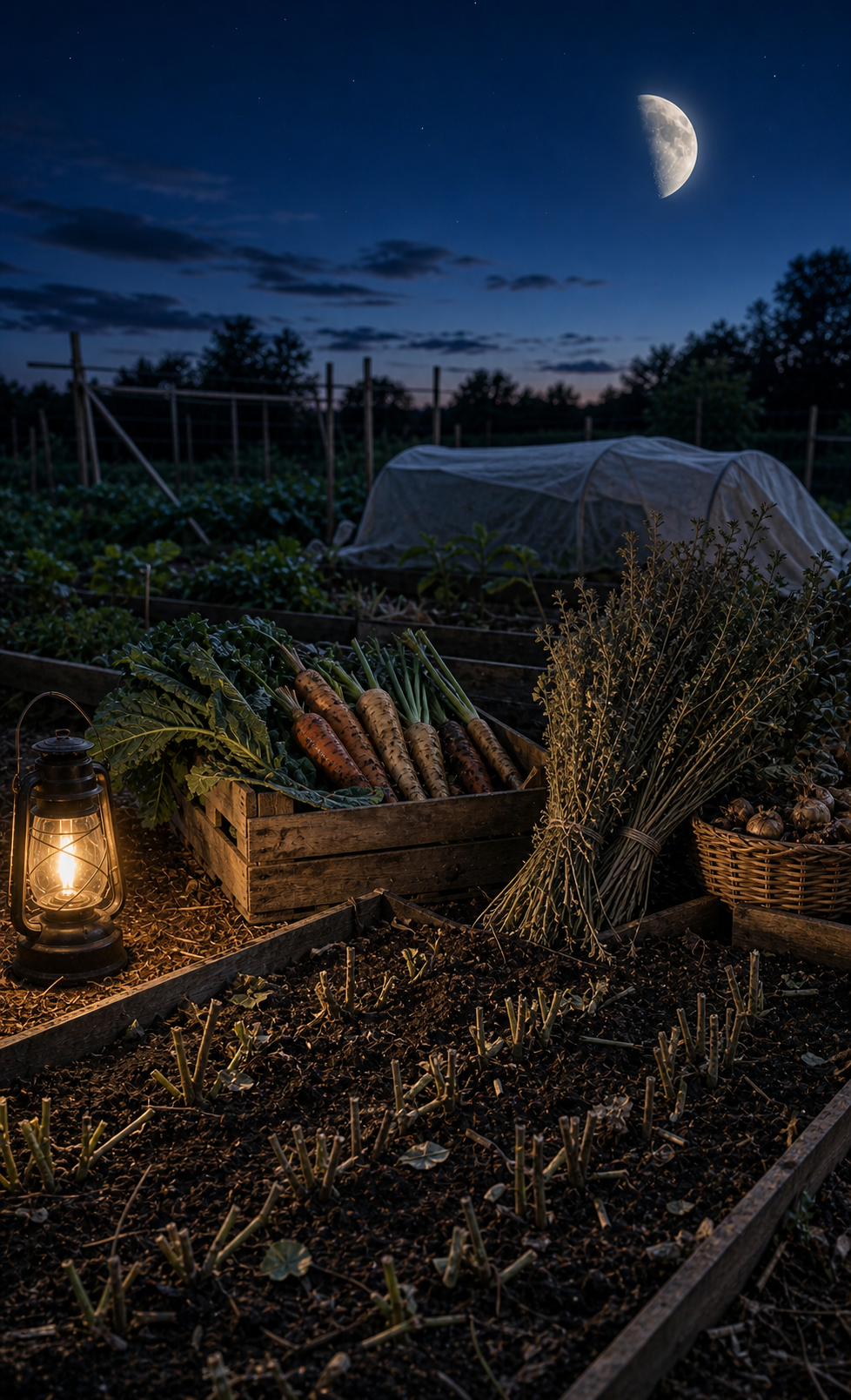
The waning moon rewards patience and a tidy hand. Harvest the roots and storage crops, prune with care, clear the weeds and pests, feed the soil, and let the garden settle toward rest. Then do the same for yourself: gather what worked, release what did not, and reach the next new moon with clean ground and clear intentions.
The longer you track these phases, the more the rhythm sinks in until it feels like your own. The natural next step is to understand your chart, because the moon in your birth chart shapes how you gather, hold on, and let go. Create your free [birth chart](/birth-chart) to see where the moon sits for you, and start aligning your garden and your inner seasons with the cycle that has guided growers for generations.
## Putting It All Together
The waning moon rewards patience and a tidy hand. Harvest the roots and storage crops, prune with care, clear the weeds and pests, feed the soil, and let the garden settle toward rest. Then do the same for yourself: gather what worked, release what did not, and reach the next new moon with clean ground and clear intentions.
The longer you track these phases, the more the rhythm sinks in until it feels like your own. The natural next step is to understand your chart, because the moon in your birth chart shapes how you gather, hold on, and let go. Create your free [birth chart](/birth-chart) to see where the moon sits for you, and start aligning your garden and your inner seasons with the cycle that has guided growers for generations.