---
title: "Lunar Gardening for Beginners: A Simple Month-by-Month Start"
metaDescription: "New to gardening by the moon? This beginner guide breaks lunar gardening into a simple monthly routine: when to sow, tend, harvest, and rest with the moon phases."
publishedAt: 2026-06-28T10:00:00.000Z
dateModified: 2026-06-28T10:00:00.000Z
wordCount: 1661
type: lunar-gardening
slug: lunar-gardening-for-beginners
url: /learn/lunar-gardening/lunar-gardening-for-beginners
heroImage: /images/articles/lunar-gardening-for-beginners/lunar-gardening-for-beginners-hero.png
ogImage: /images/articles/lunar-gardening-for-beginners/lunar-gardening-for-beginners-og.png
heroImageAlt: "Lunar gardening for beginners with herbs, lettuce seedlings, pots, and a small moonlit garden"
---
# Lunar Gardening for Beginners: A Simple Month-by-Month Start
How do you start gardening by the moon without drowning in charts? You watch one thing: whether the moon is getting brighter or getting darker, and you sow while it brightens and tend while it dims. That is the whole beginning, and you can start it tonight.
Lunar gardening has a reputation for being mystical, and it can be. But underneath the symbolism it is really just a calming habit. You hand your garden a rhythm borrowed from the sky, and you stop trying to do everything at once. No memorizing twelve zodiac signs. No special equipment. Just one question, asked of the moon, again and again.
## The one rule that gets you started
Forget signs and degrees for now. The whole beginner system rests on a single distinction: waxing versus waning.
A **waxing** moon is moving from the new moon toward the full moon, growing a little brighter each night. This is the building, reaching-upward half of the cycle, when the light is on its way back. Tradition puts it to work for sowing, planting, and feeding anything you want tall and leafy above the soil: lettuce, basil, the climbing beans you want racing up a trellis.
A **waning** moon is doing the opposite, sliding from full back toward new and dimming each night. This half settles and draws downward. It is the time to harvest, prune, weed, and turn the soil, and to plant the things that grow down instead of up: carrots, garlic, the bulbs you tuck in for next year.
So there is your starting framework. Waxing grows up, waning draws down. If you want to understand why the old almanacs split the cycle this way, the guide to [waxing versus waning energy](/learn/moon/waxing-vs-waning-moon-meaning) unpacks the symbolism, and our [complete guide to gardening by the moon](/learn/lunar-gardening/how-to-garden-by-the-moon-complete-guide) shows how the fuller system builds on this same foundation.
| The moon is... | It looks... | Good for... |
| --- | --- | --- |
| Waxing | Growing brighter, toward full | Sowing seeds, planting leafy greens, feeding, watering |
| Full | Brightest, fully round | Harvesting juicy fruit, resting, observing |
| Waning | Dimming, toward dark | Harvesting roots, pruning, weeding, composting |
| New | Dark, no visible moon | Resting the garden and yourself, planning |
 ## A simple monthly rhythm
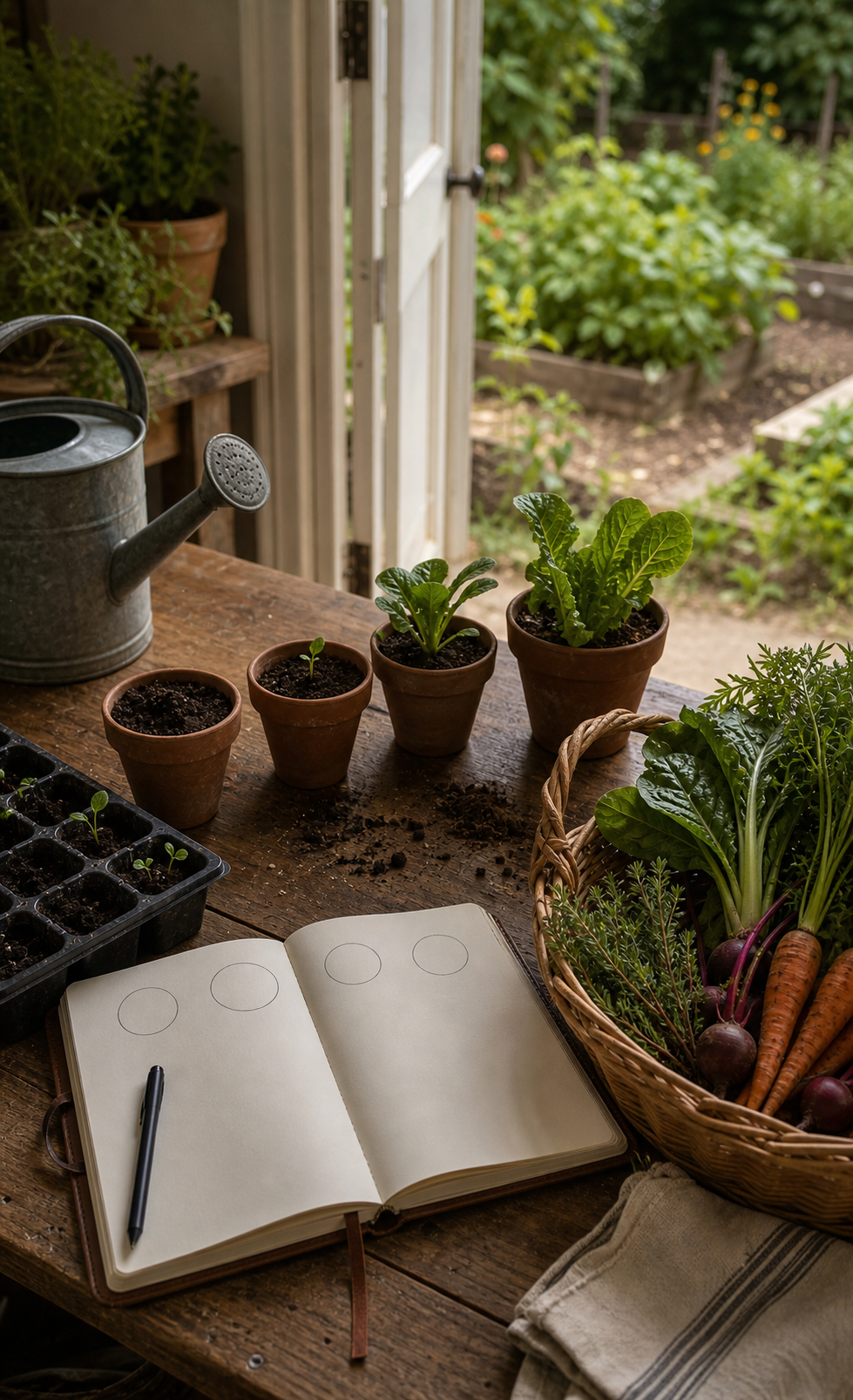
Every lunar month follows the same four beats, no matter which calendar month you happen to be in. Learn the pattern once and you can lean on it forever. Picture one slow breath in and one slow breath out, repeated about every 29 days.
### Week 1: New moon to first quarter (sow)
At the new moon, the light starts to return, and this is your sowing window. Plant seeds for leafy crops, start trays on a sunny windowsill, and set a few quiet intentions for what you hope to grow. If you like a bit of ritual, this is the natural moment for it, the kind of pause described in our [new moon intentions guide](/learn/moon/new-moon-rituals-intentions-guide).
### Week 2: First quarter to full moon (tend)
Now the light is strong and still climbing. Keep sowing leafy and fruiting plants, water deeply, feed the soil, and move your sturdiest seedlings out to their final beds. Sap is said to rise through this stretch, so everything reaching above the ground feels carried along with it.
### Week 3: Full moon to last quarter (harvest)
The moon hits full and begins to wane. This is a generous harvest window, best of all for the juicy, above-ground things you want to eat fresh: ripe tomatoes, a basket of cucumbers, herbs cut at their most fragrant. It is also a fine time to do nothing but stand in the garden and look. The [waning moon harvesting guide](/learn/lunar-gardening/waning-moon-harvesting-guide) goes deeper into why this half of the cycle suits gathering and putting food by.
### Week 4: Last quarter to new moon (rest and root)
The light fades toward dark, and the energy of the month moves downward, into soil and roots. Plant root vegetables and bulbs, prune, pull weeds, turn the compost, tidy the edges. Then, at the dark of the moon, let the garden rest, and let yourself rest with it, before the whole cycle starts over.
## Your month-by-month start for 2026
You do not have to wait for spring. The next new moon is reason enough to begin. Below are the 2026 new moons, your sowing cues, and the full moons, your harvest cues, so you can step straight into the rhythm from wherever you are in the year. Find the month you are in and go.
| Month | New moon (sow) | Full moon (harvest) |
| --- | --- | --- |
| January | Jan 18 (Capricorn) | Jan 3, Wolf Moon (Cancer) |
| February | Feb 17 (Aquarius) | Feb 1, Snow Moon (Leo) |
| March | Mar 18 (Pisces) | Mar 3, full moon (Virgo) |
| April | Apr 17 (Aries) | Apr 1, Pink Moon (Libra) |
| May | May 16 (Taurus) | May 1, Flower Moon (Scorpio) |
| June | Jun 14 (Gemini) | Jun 29, Strawberry Moon (Capricorn) |
| July | Jul 14 (Cancer) | Jul 29, Sturgeon Moon (Aquarius) |
| August | Aug 12 (Leo) | Aug 28, full moon (Pisces) |
| September | Sep 10 (Virgo) | Sep 26, Harvest Moon (Aries) |
| October | Oct 10 (Libra) | Oct 25, Hunter's Moon (Taurus) |
| November | Nov 8 (Scorpio) | Nov 24, Beaver Moon (Gemini) |
| December | Dec 8 (Sagittarius) | Dec 23, Cold Moon (Cancer) |
A couple of notes to make the calendar feel less mysterious. May carries two full moons, including a Blue Moon on May 31 in Sagittarius, so that month hands you an extra harvest cue. The Harvest Moon on September 26 is the full moon closest to the autumn equinox, which is why it has been tied for centuries to bringing in the season's abundance. If you want to make something of that night, our [Harvest Moon 2026 guide](/learn/lunar-gardening/harvest-moon-2026-meaning-dates-rituals) covers its dates and gentle rituals.
Four eclipses also fall in 2026: two solar, on February 17 and August 12, and two lunar, on March 3 and August 28. Eclipses are intense, concentrated lunations, but as a beginner you do not need to do anything special around them. Plenty of gardeners simply treat eclipse days as rest days, set the seed packets aside, and watch.
## Common beginner mistakes (and how to relax about them)
**Trying to track everything at once.** Signs, void-of-course timings, biodynamic preparations: none of that belongs in your first month. Follow waxing versus waning for a few cycles. Once that feels like second nature, add a layer.
**Fighting your climate.** The moon sets the rhythm, but your local weather sets the hard limits. A waxing moon in deep winter is still no reason to sow tomatoes outdoors. Pair the lunar timing with what actually grows where you live, and when.
**Expecting magic overnight.** This is a habit, not a quick fix. The real payoff tends to be quieter than a sudden bumper crop: a calmer, more attentive relationship with your plants, the sense that you are working with the season instead of against it. Give it a full season before you decide what you think.
**Feeling guilty for missing a window.** You will miss days. That is genuinely fine. The cycle swings back around every month. The point of all this is to take pressure off, not to invent a new thing to fall behind on.
**Skipping the rest phase.** The dark of the moon is part of the system, not a hole in it. Letting the garden pause, and pausing yourself, counts as the work too.
## A few simple tools
You can begin with nothing but your own eyes. Step outside, find the moon, and compare it to last night: more of it lit means waxing, less means waning. A few small aids do help the habit stick, though.
- **A moon phase calendar.** The single most useful thing you can have. A printed or digital calendar that marks the new and full moons keeps you oriented without any guesswork. Our [2026 moon planting and harvest calendar](/learn/lunar-gardening/2026-moon-planting-and-harvest-calendar) is built for exactly that.
- **A garden journal.** Jot down what you planted, on which phase, and how it turned out. By the end of a season, your own notes will teach you more than any guide.
- **A simple notebook or phone reminder.** Set a gentle nudge for the next new moon and the next full moon so you are not forever checking the sky.
- **A phase reference.** When you get curious about the in-between stages, the [eight moon phases explained](/learn/moon/moon-phases-explained-8-phases-guide) lays all of them out clearly.
That really is enough to start. Everything beyond it is optional polish for later, like matching tasks to zodiac signs with our [planting days by zodiac sign guide](/learn/lunar-gardening/best-planting-and-harvesting-days-by-zodiac-sign) once the basics feel automatic.
## A simple monthly rhythm
Every lunar month follows the same four beats, no matter which calendar month you happen to be in. Learn the pattern once and you can lean on it forever. Picture one slow breath in and one slow breath out, repeated about every 29 days.
### Week 1: New moon to first quarter (sow)
At the new moon, the light starts to return, and this is your sowing window. Plant seeds for leafy crops, start trays on a sunny windowsill, and set a few quiet intentions for what you hope to grow. If you like a bit of ritual, this is the natural moment for it, the kind of pause described in our [new moon intentions guide](/learn/moon/new-moon-rituals-intentions-guide).
### Week 2: First quarter to full moon (tend)
Now the light is strong and still climbing. Keep sowing leafy and fruiting plants, water deeply, feed the soil, and move your sturdiest seedlings out to their final beds. Sap is said to rise through this stretch, so everything reaching above the ground feels carried along with it.
### Week 3: Full moon to last quarter (harvest)
The moon hits full and begins to wane. This is a generous harvest window, best of all for the juicy, above-ground things you want to eat fresh: ripe tomatoes, a basket of cucumbers, herbs cut at their most fragrant. It is also a fine time to do nothing but stand in the garden and look. The [waning moon harvesting guide](/learn/lunar-gardening/waning-moon-harvesting-guide) goes deeper into why this half of the cycle suits gathering and putting food by.
### Week 4: Last quarter to new moon (rest and root)
The light fades toward dark, and the energy of the month moves downward, into soil and roots. Plant root vegetables and bulbs, prune, pull weeds, turn the compost, tidy the edges. Then, at the dark of the moon, let the garden rest, and let yourself rest with it, before the whole cycle starts over.
## Your month-by-month start for 2026
You do not have to wait for spring. The next new moon is reason enough to begin. Below are the 2026 new moons, your sowing cues, and the full moons, your harvest cues, so you can step straight into the rhythm from wherever you are in the year. Find the month you are in and go.
| Month | New moon (sow) | Full moon (harvest) |
| --- | --- | --- |
| January | Jan 18 (Capricorn) | Jan 3, Wolf Moon (Cancer) |
| February | Feb 17 (Aquarius) | Feb 1, Snow Moon (Leo) |
| March | Mar 18 (Pisces) | Mar 3, full moon (Virgo) |
| April | Apr 17 (Aries) | Apr 1, Pink Moon (Libra) |
| May | May 16 (Taurus) | May 1, Flower Moon (Scorpio) |
| June | Jun 14 (Gemini) | Jun 29, Strawberry Moon (Capricorn) |
| July | Jul 14 (Cancer) | Jul 29, Sturgeon Moon (Aquarius) |
| August | Aug 12 (Leo) | Aug 28, full moon (Pisces) |
| September | Sep 10 (Virgo) | Sep 26, Harvest Moon (Aries) |
| October | Oct 10 (Libra) | Oct 25, Hunter's Moon (Taurus) |
| November | Nov 8 (Scorpio) | Nov 24, Beaver Moon (Gemini) |
| December | Dec 8 (Sagittarius) | Dec 23, Cold Moon (Cancer) |
A couple of notes to make the calendar feel less mysterious. May carries two full moons, including a Blue Moon on May 31 in Sagittarius, so that month hands you an extra harvest cue. The Harvest Moon on September 26 is the full moon closest to the autumn equinox, which is why it has been tied for centuries to bringing in the season's abundance. If you want to make something of that night, our [Harvest Moon 2026 guide](/learn/lunar-gardening/harvest-moon-2026-meaning-dates-rituals) covers its dates and gentle rituals.
Four eclipses also fall in 2026: two solar, on February 17 and August 12, and two lunar, on March 3 and August 28. Eclipses are intense, concentrated lunations, but as a beginner you do not need to do anything special around them. Plenty of gardeners simply treat eclipse days as rest days, set the seed packets aside, and watch.
## Common beginner mistakes (and how to relax about them)
**Trying to track everything at once.** Signs, void-of-course timings, biodynamic preparations: none of that belongs in your first month. Follow waxing versus waning for a few cycles. Once that feels like second nature, add a layer.
**Fighting your climate.** The moon sets the rhythm, but your local weather sets the hard limits. A waxing moon in deep winter is still no reason to sow tomatoes outdoors. Pair the lunar timing with what actually grows where you live, and when.
**Expecting magic overnight.** This is a habit, not a quick fix. The real payoff tends to be quieter than a sudden bumper crop: a calmer, more attentive relationship with your plants, the sense that you are working with the season instead of against it. Give it a full season before you decide what you think.
**Feeling guilty for missing a window.** You will miss days. That is genuinely fine. The cycle swings back around every month. The point of all this is to take pressure off, not to invent a new thing to fall behind on.
**Skipping the rest phase.** The dark of the moon is part of the system, not a hole in it. Letting the garden pause, and pausing yourself, counts as the work too.
## A few simple tools
You can begin with nothing but your own eyes. Step outside, find the moon, and compare it to last night: more of it lit means waxing, less means waning. A few small aids do help the habit stick, though.
- **A moon phase calendar.** The single most useful thing you can have. A printed or digital calendar that marks the new and full moons keeps you oriented without any guesswork. Our [2026 moon planting and harvest calendar](/learn/lunar-gardening/2026-moon-planting-and-harvest-calendar) is built for exactly that.
- **A garden journal.** Jot down what you planted, on which phase, and how it turned out. By the end of a season, your own notes will teach you more than any guide.
- **A simple notebook or phone reminder.** Set a gentle nudge for the next new moon and the next full moon so you are not forever checking the sky.
- **A phase reference.** When you get curious about the in-between stages, the [eight moon phases explained](/learn/moon/moon-phases-explained-8-phases-guide) lays all of them out clearly.
That really is enough to start. Everything beyond it is optional polish for later, like matching tasks to zodiac signs with our [planting days by zodiac sign guide](/learn/lunar-gardening/best-planting-and-harvesting-days-by-zodiac-sign) once the basics feel automatic.
 ## Begin with the next new moon
It comes down to this: watch whether the moon is brightening or dimming, sow and feed while it waxes, harvest and tend while it wanes, and rest in the dark. Then do it again next month. That gentle loop is the entire practice.
Your nearest starting line is the next new moon on the calendar above. Pick it, sow one tray of something, and let the rhythm take it from there. As you settle into the moon's pattern, you may grow curious about your own, because the same moon that times your garden sat in a particular sign and phase on the day you were born, shaping how you nurture and rest and grow. You can explore yours for free with our [birth chart tool](/birth-chart) and see where your personal lunar story begins.
## Begin with the next new moon
It comes down to this: watch whether the moon is brightening or dimming, sow and feed while it waxes, harvest and tend while it wanes, and rest in the dark. Then do it again next month. That gentle loop is the entire practice.
Your nearest starting line is the next new moon on the calendar above. Pick it, sow one tray of something, and let the rhythm take it from there. As you settle into the moon's pattern, you may grow curious about your own, because the same moon that times your garden sat in a particular sign and phase on the day you were born, shaping how you nurture and rest and grow. You can explore yours for free with our [birth chart tool](/birth-chart) and see where your personal lunar story begins.