---
title: "How Planetary Transits Affect Your Garden"
metaDescription: "Beyond the Moon, slower planetary transits shape the gardening year. Learn how Jupiter, Saturn, and seasonal cycles influence growth, patience, and abundance in your garden."
publishedAt: 2026-06-28T10:00:00.000Z
dateModified: 2026-06-28T10:00:00.000Z
wordCount: 1580
type: lunar-gardening
slug: how-planetary-transits-affect-your-garden
url: /learn/lunar-gardening/how-planetary-transits-affect-your-garden
heroImage: /images/articles/how-planetary-transits-affect-your-garden/how-planetary-transits-affect-your-garden-hero.png
ogImage: /images/articles/how-planetary-transits-affect-your-garden/how-planetary-transits-affect-your-garden-og.png
heroImageAlt: "Planetary transits and garden timing shown through seedlings, tools, compost, and greenhouse morning light"
---
# How Planetary Transits Affect Your Garden
The Moon is the planet gardeners watch most closely, yet it is the one that touches your garden for the shortest time. It races through a sign in roughly two and a half days and circles the whole zodiac in under a month, which is why it feels so immediate: you can sow on a waxing Moon and see the difference within a week. But the Moon is just the fastest hand on a much larger clock. Behind it move Jupiter, Saturn, and Mars, planets that linger in one place for months or years and quietly set the mood of an entire growing season before the Moon has finished a single lap.
You do not have to learn astrology to put this to use. Think of the slow planets as weather patterns for your intentions. Jupiter widens. Saturn steadies. Mars stirs the heat up. The Sun keeps the calendar honest. Read on for what each one means for the garden, and how to lay it gently over the Moon practice you may already keep.
## The two layers of garden timing
Sky timing comes in two layers, and they answer different questions. The fast layer is lunar: the eight phases of the Moon and the sign it is passing through, which together suggest good windows for sowing, transplanting, pruning, and harvesting across a month. New to this? The [complete guide to gardening by the Moon](/learn/lunar-gardening/how-to-garden-by-the-moon-complete-guide) is the place to start.
The slow layer is planetary, and it works on a longer wavelength. These transits will never tell you to plant on Tuesday. They color the whole season instead: a year that wants to grow outward, a season for consolidating, a stretch of restless energy that needs somewhere to go. The slow layer settles the big question of whether this is a year to dig new beds or to tend the ones you have. The Moon handles the day and the week.
## Jupiter: growth, expansion, and abundance
Jupiter is the planet of growth and generosity, and it is the easiest one to feel with your hands in the soil. Wherever Jupiter goes, things swell. It favors ambitious plans, unfamiliar varieties, sprawling vines, and the particular optimism that has you adding one more seed packet to the order than you meant to.
Because Jupiter sits in a single sign for about a year, it sets a yearlong tone rather than a daily one. When you feel the pull to add a bed, try the crop that has always intimidated you, or simply plant more, that expansive impulse is worth honoring. Its shadow is overreach. Too many seedlings hardening off on the windowsill, beds packed too tight to breathe, a plot larger than your weekends and your watering can can keep up with. Let Jupiter dream the vision, then let the work cut it back to something you can actually tend.
The kindest way through a Jupiter season is to pick one real place to grow: a new fruit tree, a wider herb patch, a small greenhouse. Pour the enthusiasm there instead of thinning it across the whole plot until none of it gets enough of you.
## Saturn: structure, patience, and pruning
If Jupiter is the gas pedal, Saturn is the steering wheel and the brakes. Saturn rules structure, discipline, boundaries, and the slow payoff of patience. In the garden it speaks to everything measured in years rather than weeks: building healthy soil, settling perennials in, training a fruit tree along a wire, and the unglamorous maintenance that quietly decides whether a garden thrives or just survives.
Saturn governs pruning too, which fits, because Saturn is the planet that asks what you are willing to cut so the rest can flourish. A Saturn season suits the chores that are easiest to postpone forever: edging beds, mending the fence, dividing perennials that have outgrown their corner, working compost into tired soil, and deciding honestly about the shrub that has not earned its space in three summers.
Consistency, not intensity, is what Saturn rewards. The work feels slow and sometimes thankless while you are doing it, and then one spring you notice the soil is dark and crumbly and the trees are exactly where you wanted them. When you feel called to organize, simplify, or commit to the long game, you are moving with Saturn rather than against it.
 ## Mars: energy, drive, and pests
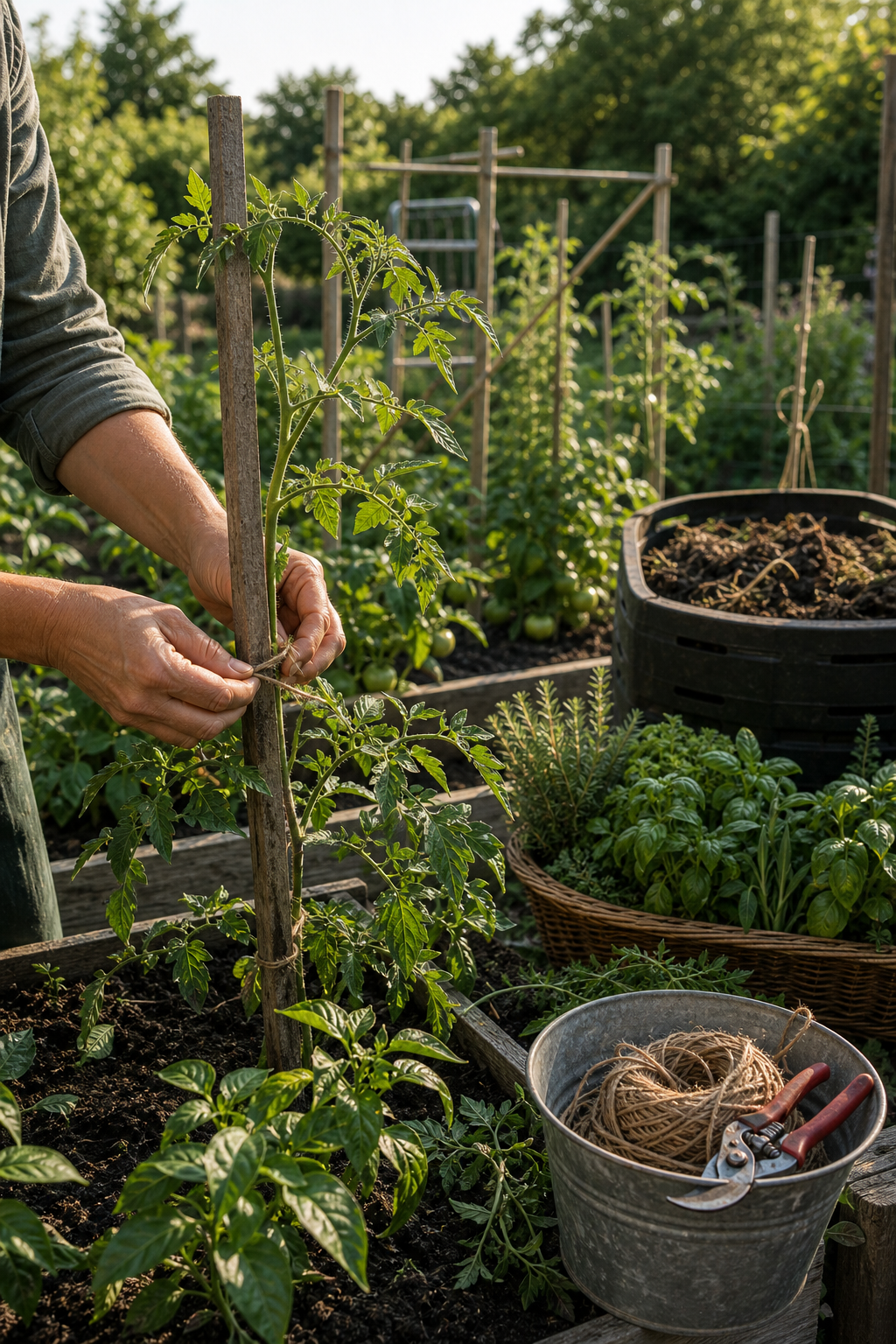
Mars is the planet of energy, drive, and heat, and a Mars-flavored stretch can arrive like a surge of physical motivation. It is made for the demanding work: digging a new bed, hauling barrows of mulch, clearing a tangle of bramble, building the raised frame you sketched in winter. If there is a heavy project waiting on muscle and momentum, a Mars window is the time to throw yourself at it.
Mars has a sharper edge as well. It is the old planet of conflict and irritation, and in the garden that surfaces as friction: aphids massing on the undersides of leaves, weeds suddenly bolder, your own patience running thin in the heat. When Mars feels strong, stay a little more watchful. Check those leaf undersides, keep ahead of the weeds, and aim the extra fire at focused effort. Spent well, Mars energy clears a remarkable amount of ground. Spent carelessly, it leaves you with rushed mistakes and sore shoulders.
One simple habit helps during these high-energy spells: pair the big physical push with a clear stopping point. The drive then serves the garden instead of burning you out by four o'clock.
## The Sun and the seasonal cycle
The most dependable transit of all is the Sun, because the Sun moving through the zodiac simply is the year. As it crosses from sign to sign it marks the equinoxes, the solstices, and the steady turn of the seasons that decides what is even possible to grow. No clever lunar timing will coax a tender tomato through a hard frost. The solar season sets the outer wall, and everything else happens inside it.
The solstices and equinoxes make natural pivot points for planning. Spring equinox throws open the active sowing season. Summer solstice marks peak light and the wild green rush of growth. Autumn equinox turns your attention to gathering and storing, and the winter solstice is for rest, soil cover, and dreaming up next year. The Harvest Moon, the full Moon nearest the autumn equinox, falls on September 26, 2026 in Aries, a bright marker of the year tipping from gathering toward winding down. There is more on that turning point in the [Harvest Moon 2026 guide](/learn/lunar-gardening/harvest-moon-2026-meaning-dates-rituals).
## A seasonal planning map for 2026
The full Moons give the year a useful skeleton. Each is a monthly checkpoint to take stock, harvest what is ripe, and reset your intentions. Here is how the seasonal arc lines up with the major lunar markers, so you can lay the slow planetary themes over a calendar you already keep.
| Season | Key 2026 full Moons | Garden focus |
| --- | --- | --- |
| Late winter | Jan 3 Wolf Moon in Cancer, Feb 1 Snow Moon in Leo | Plan, order seeds, start indoors, build structure |
| Spring | Mar 3 in Virgo (total lunar eclipse), Apr 1 Pink Moon in Libra, May 1 Flower Moon in Scorpio | Sow, transplant, expand with care |
| Early summer | May 31 Blue Moon in Sagittarius, Jun 29 Strawberry Moon in Capricorn | Tend, support growth, stay ahead of pests |
| Late summer | Jul 29 Sturgeon Moon in Aquarius, Aug 28 in Pisces (partial lunar eclipse) | Harvest, preserve, water consistently |
| Autumn | Sep 26 Harvest Moon in Aries, Oct 25 Hunter's Moon in Taurus | Gather, store, plant garlic and bulbs |
| Early winter | Nov 24 Beaver Moon in Gemini, Dec 23 Cold Moon in Cancer | Rest, mulch, reflect, plan again |
The year's two solar eclipses, on February 17 in Aquarius and August 12 in Leo, fall at new Moons and tend to mark fresh starts and reset points. You need not garden any differently on an eclipse. They are simply good moments to stop and ask whether your plans still fit the season.
## Layering the slow planets onto your Moon practice
The trick is to let each layer do its own job. Let the slow planets set the theme for the year and the season, then let the Moon pick the actual days. A practical rhythm looks like this:
- At the start of the year, set a broad intention. Is this a Jupiter year for expanding, or a Saturn year for consolidating and building foundations?
- Each season, hold that intention up against the solar calendar and adjust for what is realistic.
- Each month, use the full and new Moons as checkpoints to harvest, release what is not working, and renew your focus.
- Each week, follow the lunar phase and sign for the daily work of sowing, transplanting, and harvesting.
To see where the slower planets actually sit at any moment, the [transit tracker](/transits) shows the current sky, and the [2026 astrology forecast](/learn/astrology/2026-astrology-forecast) lays out the larger planetary themes for the year. For a closer feel of how one sign flavors the work, the guide to [Moon in Aries gardening energy](/learn/lunar-gardening/moon-in-aries-gardening-energy-guide) reads a single influence in detail.
## Keeping it grounded
Worth saying plainly: these are symbolic frameworks, not mechanical controls. Jupiter does not fertilize your soil, and Saturn will not prune your roses while you sleep. What the slow planets offer is a calendar of intention, a way to line up your energy and attention with the natural cycles of growth, consolidation, and rest. The real work is still soil, water, light, and your own steady hands.
Used this way, the sky becomes a gentle planning companion instead of a list of rules. Expand when the year invites it. Build when it asks for patience. Push when there is energy to spend, and rest when the light withdraws. Your garden moves through seasons the way you do, and there is real comfort in working with that rhythm rather than fighting it.
## Mars: energy, drive, and pests
Mars is the planet of energy, drive, and heat, and a Mars-flavored stretch can arrive like a surge of physical motivation. It is made for the demanding work: digging a new bed, hauling barrows of mulch, clearing a tangle of bramble, building the raised frame you sketched in winter. If there is a heavy project waiting on muscle and momentum, a Mars window is the time to throw yourself at it.
Mars has a sharper edge as well. It is the old planet of conflict and irritation, and in the garden that surfaces as friction: aphids massing on the undersides of leaves, weeds suddenly bolder, your own patience running thin in the heat. When Mars feels strong, stay a little more watchful. Check those leaf undersides, keep ahead of the weeds, and aim the extra fire at focused effort. Spent well, Mars energy clears a remarkable amount of ground. Spent carelessly, it leaves you with rushed mistakes and sore shoulders.
One simple habit helps during these high-energy spells: pair the big physical push with a clear stopping point. The drive then serves the garden instead of burning you out by four o'clock.
## The Sun and the seasonal cycle
The most dependable transit of all is the Sun, because the Sun moving through the zodiac simply is the year. As it crosses from sign to sign it marks the equinoxes, the solstices, and the steady turn of the seasons that decides what is even possible to grow. No clever lunar timing will coax a tender tomato through a hard frost. The solar season sets the outer wall, and everything else happens inside it.
The solstices and equinoxes make natural pivot points for planning. Spring equinox throws open the active sowing season. Summer solstice marks peak light and the wild green rush of growth. Autumn equinox turns your attention to gathering and storing, and the winter solstice is for rest, soil cover, and dreaming up next year. The Harvest Moon, the full Moon nearest the autumn equinox, falls on September 26, 2026 in Aries, a bright marker of the year tipping from gathering toward winding down. There is more on that turning point in the [Harvest Moon 2026 guide](/learn/lunar-gardening/harvest-moon-2026-meaning-dates-rituals).
## A seasonal planning map for 2026
The full Moons give the year a useful skeleton. Each is a monthly checkpoint to take stock, harvest what is ripe, and reset your intentions. Here is how the seasonal arc lines up with the major lunar markers, so you can lay the slow planetary themes over a calendar you already keep.
| Season | Key 2026 full Moons | Garden focus |
| --- | --- | --- |
| Late winter | Jan 3 Wolf Moon in Cancer, Feb 1 Snow Moon in Leo | Plan, order seeds, start indoors, build structure |
| Spring | Mar 3 in Virgo (total lunar eclipse), Apr 1 Pink Moon in Libra, May 1 Flower Moon in Scorpio | Sow, transplant, expand with care |
| Early summer | May 31 Blue Moon in Sagittarius, Jun 29 Strawberry Moon in Capricorn | Tend, support growth, stay ahead of pests |
| Late summer | Jul 29 Sturgeon Moon in Aquarius, Aug 28 in Pisces (partial lunar eclipse) | Harvest, preserve, water consistently |
| Autumn | Sep 26 Harvest Moon in Aries, Oct 25 Hunter's Moon in Taurus | Gather, store, plant garlic and bulbs |
| Early winter | Nov 24 Beaver Moon in Gemini, Dec 23 Cold Moon in Cancer | Rest, mulch, reflect, plan again |
The year's two solar eclipses, on February 17 in Aquarius and August 12 in Leo, fall at new Moons and tend to mark fresh starts and reset points. You need not garden any differently on an eclipse. They are simply good moments to stop and ask whether your plans still fit the season.
## Layering the slow planets onto your Moon practice
The trick is to let each layer do its own job. Let the slow planets set the theme for the year and the season, then let the Moon pick the actual days. A practical rhythm looks like this:
- At the start of the year, set a broad intention. Is this a Jupiter year for expanding, or a Saturn year for consolidating and building foundations?
- Each season, hold that intention up against the solar calendar and adjust for what is realistic.
- Each month, use the full and new Moons as checkpoints to harvest, release what is not working, and renew your focus.
- Each week, follow the lunar phase and sign for the daily work of sowing, transplanting, and harvesting.
To see where the slower planets actually sit at any moment, the [transit tracker](/transits) shows the current sky, and the [2026 astrology forecast](/learn/astrology/2026-astrology-forecast) lays out the larger planetary themes for the year. For a closer feel of how one sign flavors the work, the guide to [Moon in Aries gardening energy](/learn/lunar-gardening/moon-in-aries-gardening-energy-guide) reads a single influence in detail.
## Keeping it grounded
Worth saying plainly: these are symbolic frameworks, not mechanical controls. Jupiter does not fertilize your soil, and Saturn will not prune your roses while you sleep. What the slow planets offer is a calendar of intention, a way to line up your energy and attention with the natural cycles of growth, consolidation, and rest. The real work is still soil, water, light, and your own steady hands.
Used this way, the sky becomes a gentle planning companion instead of a list of rules. Expand when the year invites it. Build when it asks for patience. Push when there is energy to spend, and rest when the light withdraws. Your garden moves through seasons the way you do, and there is real comfort in working with that rhythm rather than fighting it.
 ## Begin with your own chart
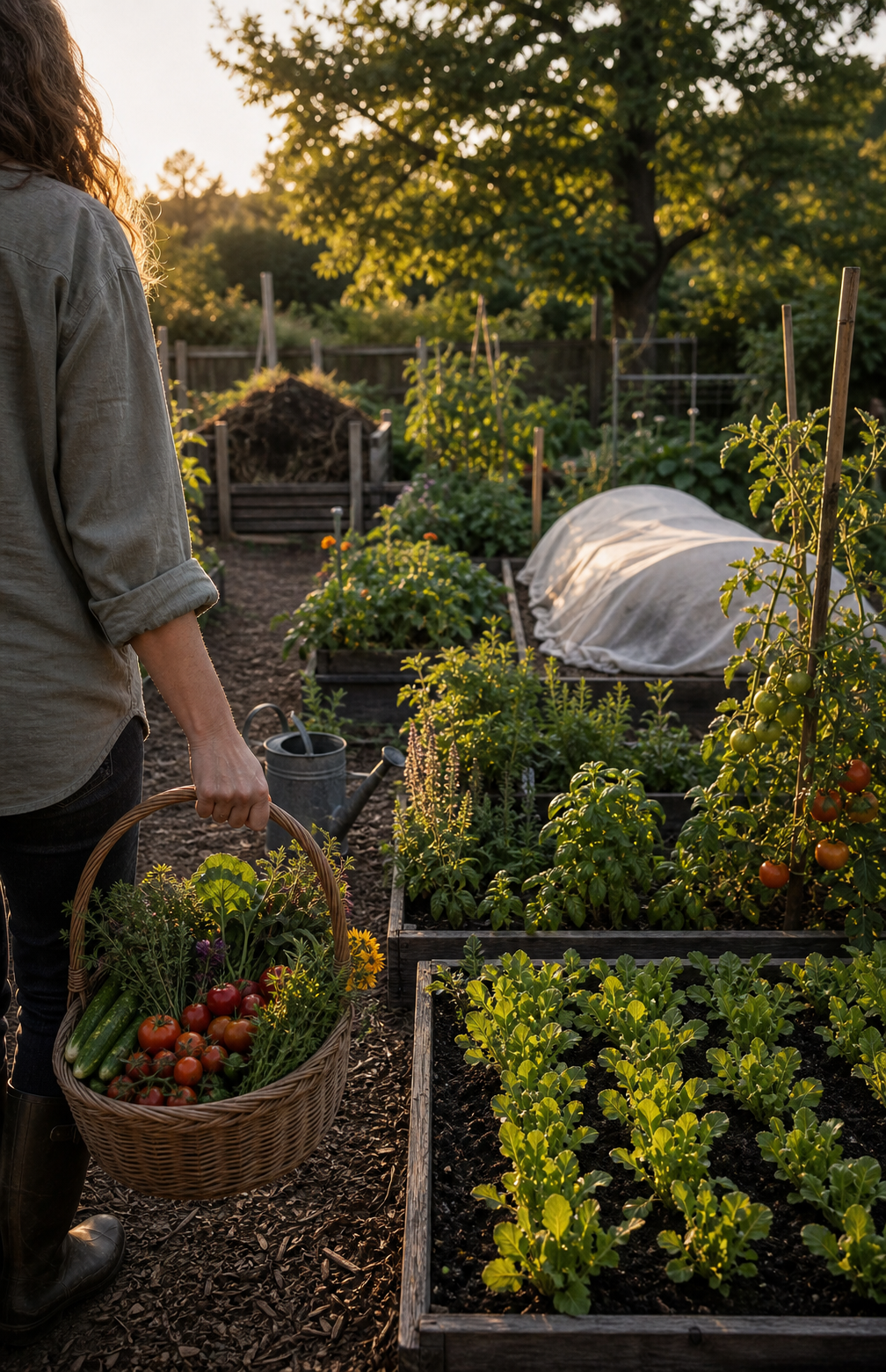
The most personal way to bring this practice home is to see where these planets sit in your own sky. Generate your free [birth chart](/birth-chart) to find where Jupiter, Saturn, and Mars live for you. Once you know, the seasons stop being abstract. You start to feel which planetary weather feels most like home, in the garden and everywhere else, and tending the soil becomes one more way of keeping time with yourself.
## Begin with your own chart
The most personal way to bring this practice home is to see where these planets sit in your own sky. Generate your free [birth chart](/birth-chart) to find where Jupiter, Saturn, and Mars live for you. Once you know, the seasons stop being abstract. You start to feel which planetary weather feels most like home, in the garden and everywhere else, and tending the soil becomes one more way of keeping time with yourself.